Thursday, February 15, 2007

Earlier pictures of HMS Bounty

While viewing the posts on this site, please, keep in mind that there may be more than one member of the Capital Marine Modellers' Guild working on a model of the same ship. There is even one modeller who has built several models of the same ship in different scales.
These are some photographs of the model of HMS Bounty that was shown in a posting in November 2006. These pictures were taken earlier in the model's construction.
The deck framing for the main deck can be seen here with the deck beneath it completed. Most of what you see here has been planked over and is no longer available to be viewed. There are many ship modellers who build this way.
More of the deck framing can be seen here. I believe that it is informative as well as interesting to see the various stages in a model's construction.

Tuesday, February 13, 2007

Nonsuch Progress

The modeller who is building Nonsuch, brought it out again to show his progress with it.You can see here that some decking, gratings and other such detail has been added. As well basic masts are in place. These may be place holders that will be replaced at a later time with more complete masts.
This overhead view shows the decks more clearly. The clear piece on the right is a piece of plastic taken from a CD case. It is being shaped to fit the stern. Once the builder is happy with the shape and fit of the piece he will use it as a template to build the stern piece out of wood.

Friday, February 09, 2007

Another Bounty Model

At the February meeting a new member brought out his work in progress of his model of HMS Bounty. The model is completely scratch built.
This shows detail on the deck. There is a small scribed hole where the mast will go.
The model builder is thinking of putting stub masts on the model. This is a fairly common practice, especially when display height is at a premium.
Hopefully there will be more to show of this model as the builder progresses with it.

Wednesday, January 17, 2007

Bluenose II

This Bluenose II Ship model was made from the Artesania-Latina kit. This one was completed within four months. The model builder says that he did his best to make it look good. It was placed under Plexiglas cover to protect it from dust.

Thursday, January 11, 2007

Some Useful Tools

At the January meeting one of our members gave a presentation on a variety of tools that he has found useful in his ship modelling and in other applications as well. This is a very small and inexpensive adjustable square. It's small size means that it can be carried easily in a pocket. This tool has proved to be extremely useful.
This is a small saw made by Veritas. It comes with a magnetic guide that includes a clamp, which can open to an inch. The clamp holds a length of wood. The saw blade held by the magnet insures a square cut every time. Veritas is Lee Valley Tools', in house brand name.
These are a set of punches, a nail set and a chisel. There is a strong spring in the centre. The way the tool is used is to place it where it is to do the work, pull the spring and release it. Doing that propels the business end of the tool as if the end had been hit with a hammer. The difference is that these tools do the job with greater accuracy.
This is a very small plane. Once the plane and the blade were lapped this tool proved to be very useful for model work as well as larger jobs. It has been used to build model ships and full size boats as well.
This is a small hack saw with a very thin blade. The tension on the blade can be easily set and the user says it cuts through the hardest woods like butter. The owner of the tool believes he purchased it at Princess Auto.
These are very small scale chisels. They are easy to sharpen and are very useful for cutting small channels, squaring off drilled holes, etc.
This is another saw made by Vertas. It has a very flexible blade and the saw teeth are all set on one side only. If you click on the picture to get a larger view you will see it has "this side up" etched on one side near the handle. This tool is ideal for cutting dowels or other protruding items flush with the surface without the need for further sanding or planing. The owner of this tool recommends that when using this saw that a protective glove be worn to prevent the very sharp teeth from cutting fingers.
This is a small inexpensive metal ruler with a movable square. It can be carried in a breast pocket and has proved to be very useful with a variety of applications.
This offset screw driver is made by Mastercraft, Canadian Tire's in house brand of tools. The person who gave the presentation said that this is the only offset screw driver he has ever found that is any good and that this one is very good. It comes with an extension and a set of attachments for just about every purpose. In the user's opinion it is very good value for money.

Friday, January 05, 2007

San Juan Nepomuceno

This model of San Juan Nepomuceno was built from an Artesania Latina kit. San Juan Nepmuceno was a seventy-four gun Spanish ship of the line launched in 1765. She served in the Spanish armada for forty years until captured in the Battle of Trafalgar in 1805
The ship was 2700 tons with eight officers, eleven midshipmen, nineteen leading seamen and 492 able seamen. The model is 1:90 scale and took the builder three years to complete. A Plexiglas case protects it.

Wednesday, January 03, 2007

Otoko-tachi no Yamato

At our January meeting one of our members showed the final battle sequence from the Japanese produced movie, Otoko-tachi no Yamato. The film is very impressive, though there is no dubbed English version yet.


A trailer for this film can be seen here.

Tuesday, December 12, 2006

Conversion of a WWII “Big Gun” Cruiser to a Guided Missile Cruiser - Now Completed

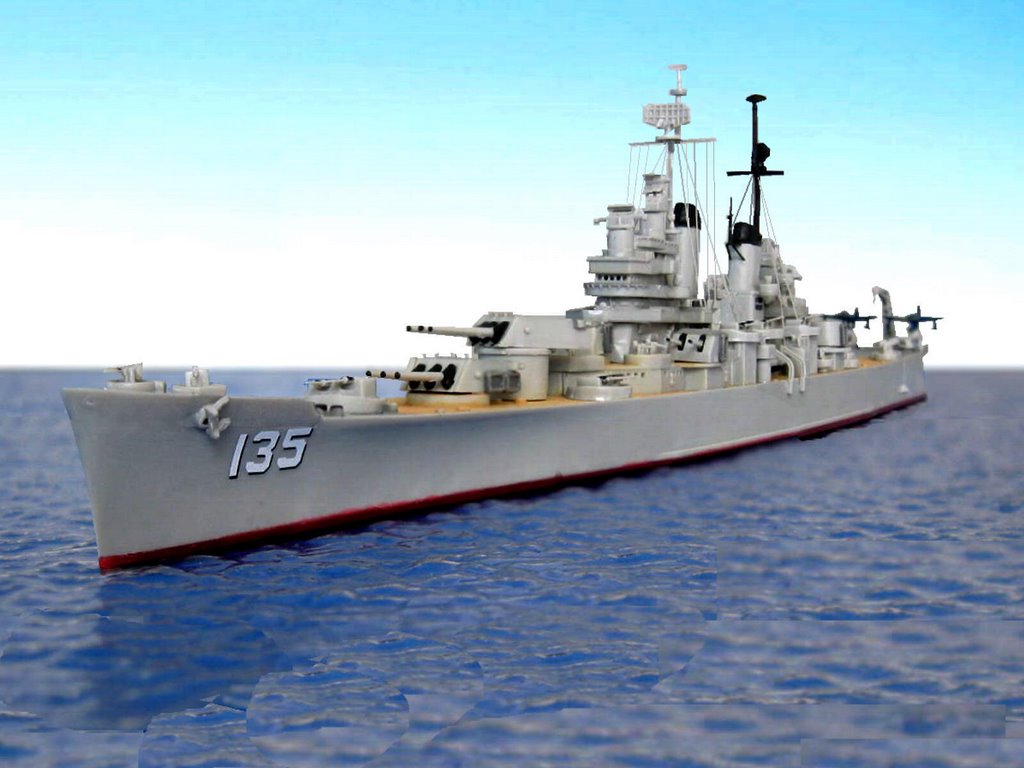
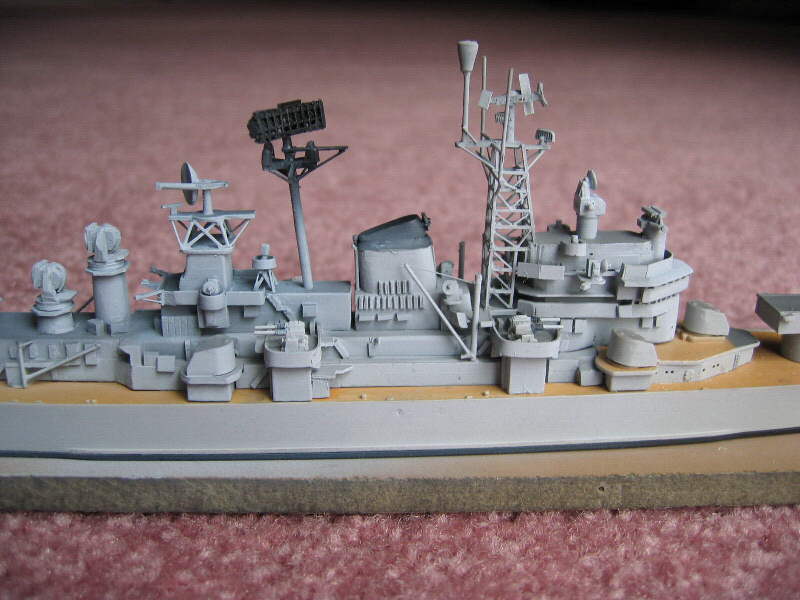
The model in the background is the completed conversion of USS Boston as detailed in the post of November 26, 2006. The model in the foreground is of USS Los Angeles, the ship kit from which the USS Boston was built. These are both Baltimore class heavy cruisers.
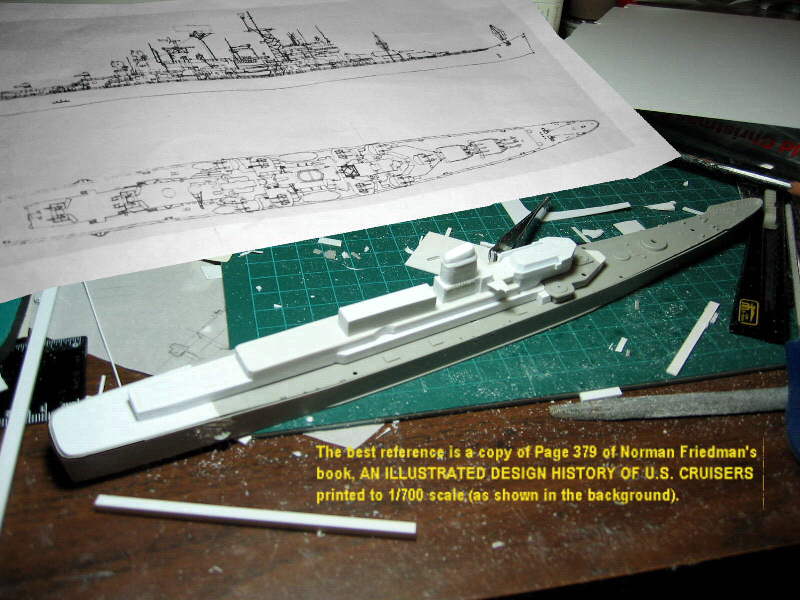
This drawing of USS Boston was copied from a magazine, modified according to photographs and resized to 1:700 scale in order to provide a plan from which to make the modifications to build the model.
This is another view of the two ships from the reverse angle. This will allow comparisons between the two ships. You will notice that the shape and width of the stern is very different.

The construction of the tower mast structure amidships used an interesting technique. Double sided tape was laid down on a surface. The modeller drew the plan for one side of the tower on the tape. He laid plastic rod down on the drawing on the tape, cutting each piece to length on the tape. He then applied a small amount of liquid plastic glue to each joint. When the glue set the piece could be removed. This was done for the front and back of the tower. The following assembly task was relatively easy.

Friday, December 08, 2006

Beginning Nonsuch

Shown here is a model of Nonsuch in the very early stages of construction. Nonsuch was the ship with which Radisson and Des Groseilliers voyaged to Canada and founded the Hudson Bay Company in 1668. This model is being built in 1:96 scale (1/8 inch to the foot). The coin in the picture is a quarter.
The two halves can be seen here held together with clips. Once the research has been done and adequate drawings either having been obtained or drawn the first stage of building the model in this case was to carve a plug using the inside dimensions of the hull.This plug is then cut into five sections as can be seen here. There are two outside parts and three inside parts. Once the hull has been constructed, the center part of the plug can be removed. This allows the other two inner pieces to collapse inward and be removed after which the two outside pieces can be removed.
The various sub assemblies are held together with pins. This allows removal and adjustment until the parts must be finally glued or otherwise fastened together.
As can be seen here grooves have been cut where the deck shelving timber and other key longitudinal beams will go. As well there are lines drawn on the plug to indicate the location of key frames.
The model will be planked on the top portion only, leaving the inner detail below open for viewing. The builder chose to build this model exclusively from holly and ebony in an attempt to simulate the look of prisoner of war bone ship models of the Napoleonic era.

Thursday, November 30, 2006

Ship in a Bottle

The club has had a number of meetings where the art of building a model ship in a bottle has been discussed. We have had it in mind to do a ship in a bottle as a club project but that has yet to happen.

One of the reasons for this is that building a ship in a bottle is a very personal project. Another may be that not everyone enjoys the same type or brand of booze. Everyone I know who has given instruction on building a ship in a bottle has said the first step is to drink the contents of the bottle.

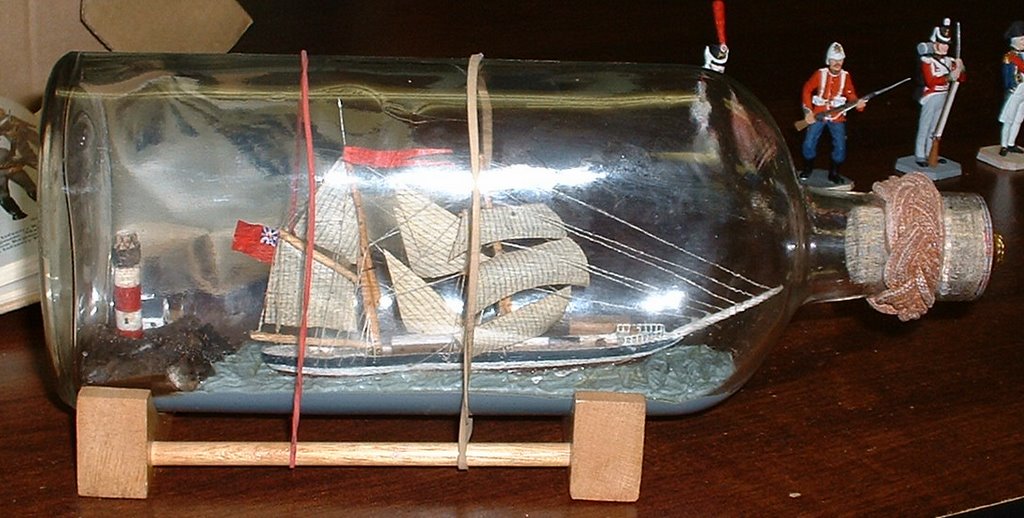
Actually what is really being done with a ship in a bottle is that the modeller is building a small diorama or scene in a bottle that has a ship in it. As you can see from the ship in a bottle shown here, there is a small island with a light house and the ship sails safely on the ocean nearby.

Building a ship in a bottle requires a set of skills very specific to the task. One must be able to sculpt and paint an ocean setting. The modeller needs to build all the necessary tools, as no manufacturer makes them. To finish off the model one also needs to be able to tie that fancy knot that goes around the neck of the bottle.

The other essential quality needed to build a ship in a bottle is a great deal of patience. There is a great deal of deserved satisfaction that goes with completing one of these and every one of them becomes a family heirloom.

Tuesday, November 28, 2006

Fairmile Hull

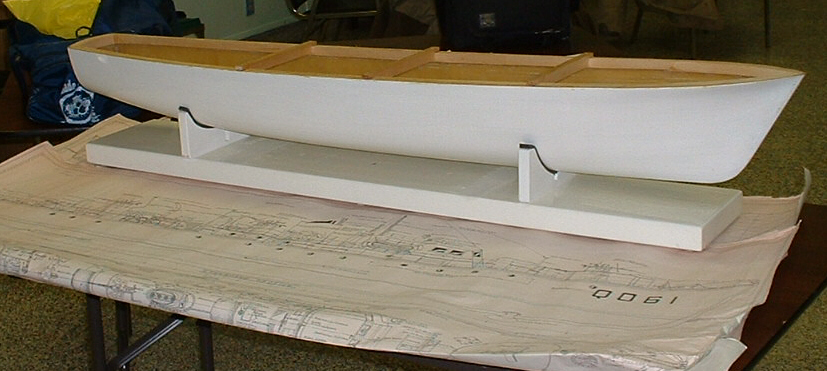
This is a hull for a Fairmile 'B' in 1:24 scale (½" to 1 foot). The sheet of paper under the model is part of the set of plans being used for the model's construction. The hull is fiberglass and would be very suitable for a radio control model. In this case I believe the finished model is destined for a display case and not the pond. Hopefully there will be more to report on this model at a later time.

Sunday, November 26, 2006

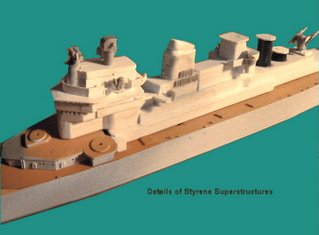
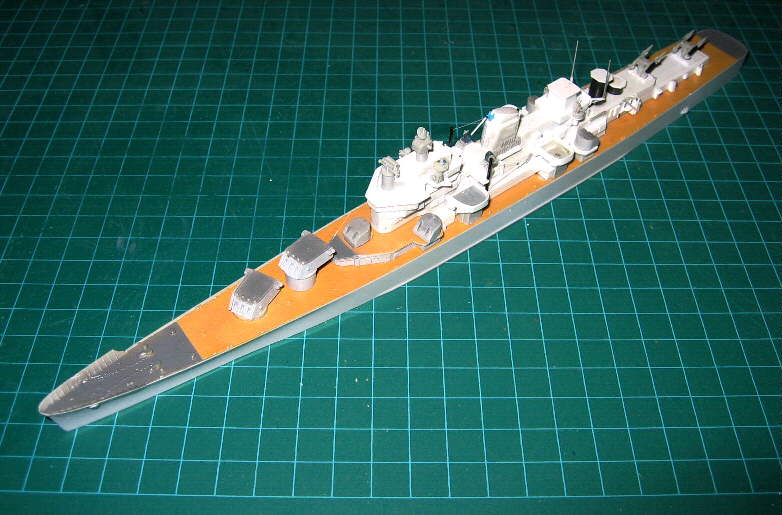
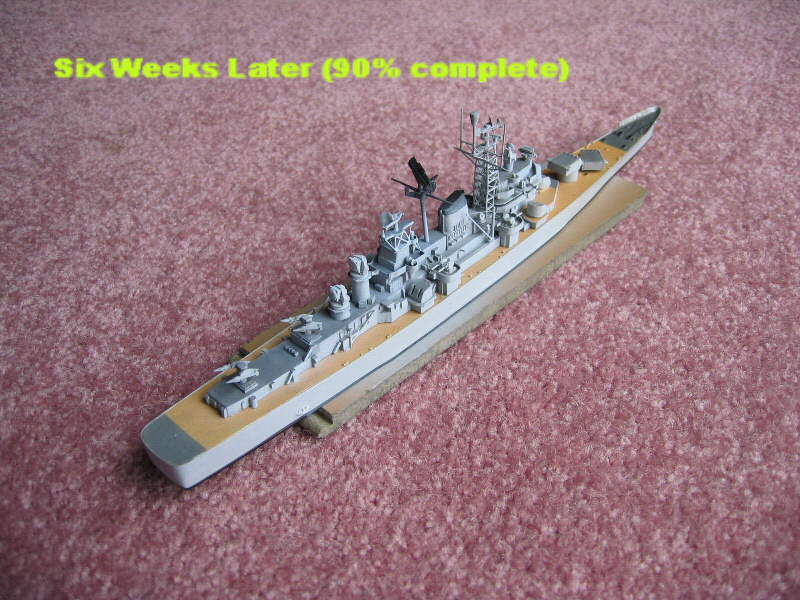
Conversion of a WWII “Big Gun” Cruiser to a Guided Missile Cruiser

In 1952 the US Navy converted two WWII heavy cruisers to carry the Terrier I missiles. USS Boston was the first one to emerge in 1955 with new bridge, superstructure, mast, funnel, missile launchers and fire control gears.
USS Boston CAG 1

There is no plastic kit available for this ship in 1:700 scale. Revell makes one from the 50’s in a larger scale. A 1:700 scale model of the Boston was built by modifying a Trumpeter kit of the USS Baltimore.

Baltimore Class Heavy Cruiser

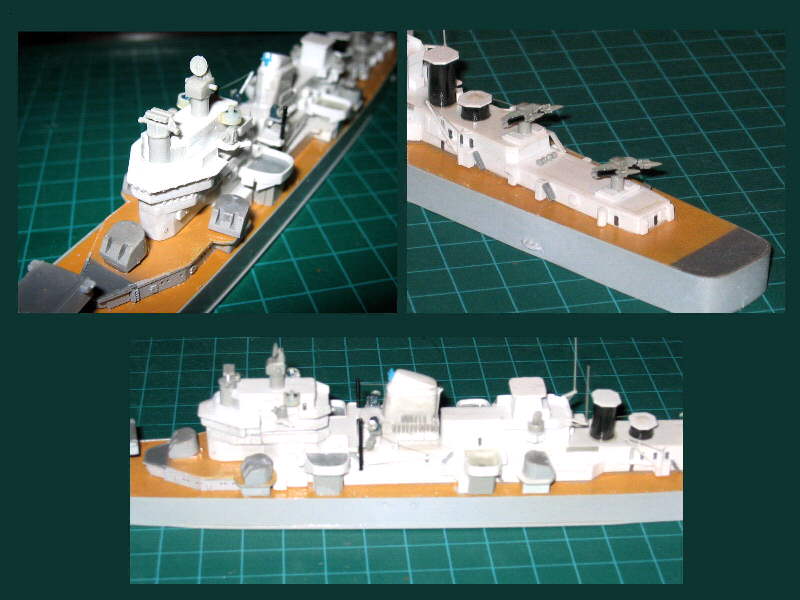
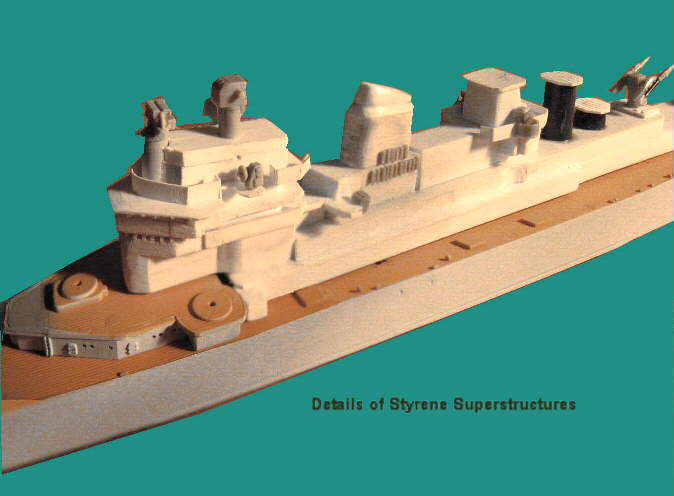
The hull, the main deck and some of the fittings were used. The rest was scratch built from styrene sheets and shapes.

The conversion as shown is not quite completed. The model is now at the stage shown here. There is more to be done and you can see some of the work involved in the process.

Friday, November 24, 2006

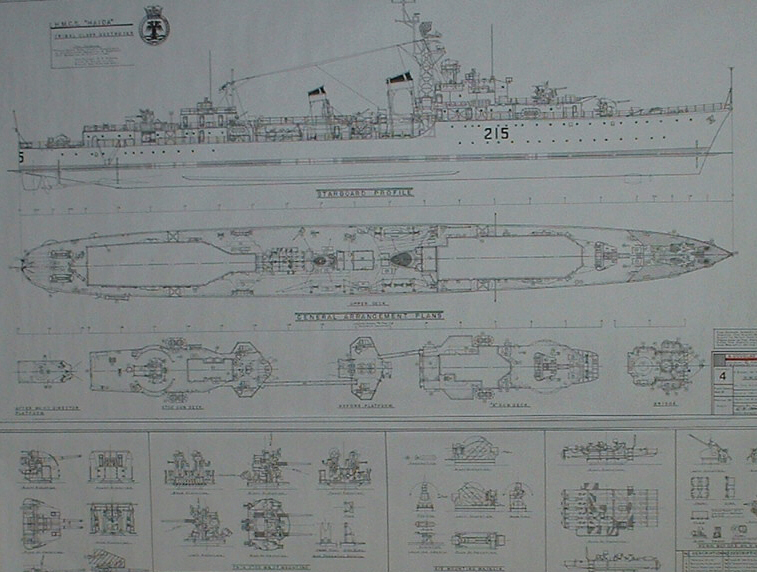
Plans for HMCS Haida

One of our members has produced some very good plans for a number of ships. Shown here is a plan he has drawn for HMCS Haida.He has produced plans for Haida as she appeared in 1944 and in 1963. The plans are in 1:96 scale and include general arrangement profile, plan and hull lines. The plans are available for purchase from The Hobby Centre.

This may seem like a commercial plug, but it isn't. We are just proud of our members' accomplishments and their contribution to the hobby, which we wish to share with others.

1:700 Waterline Ships

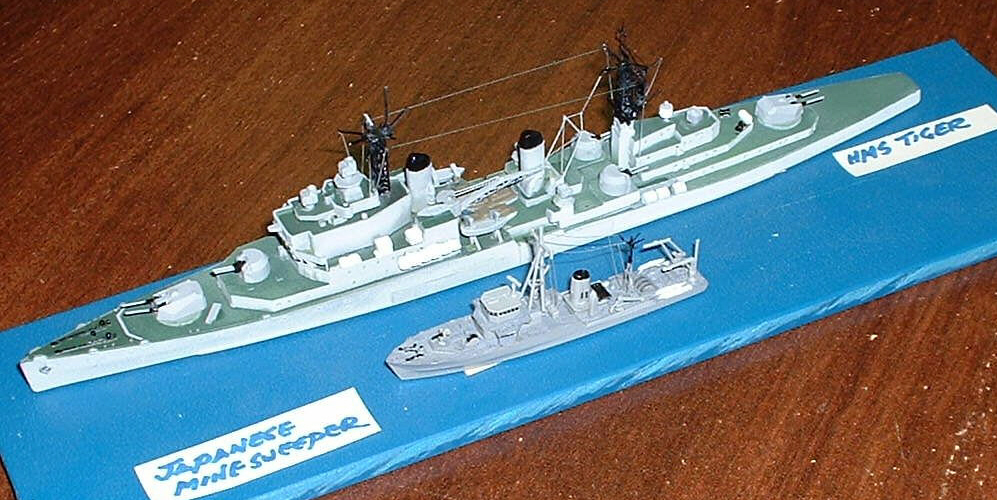
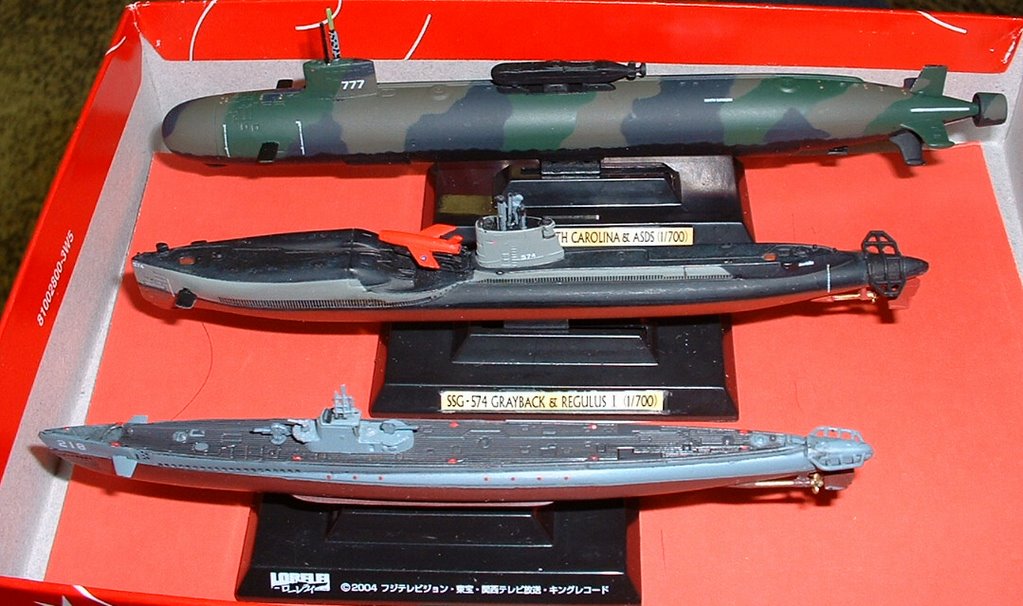
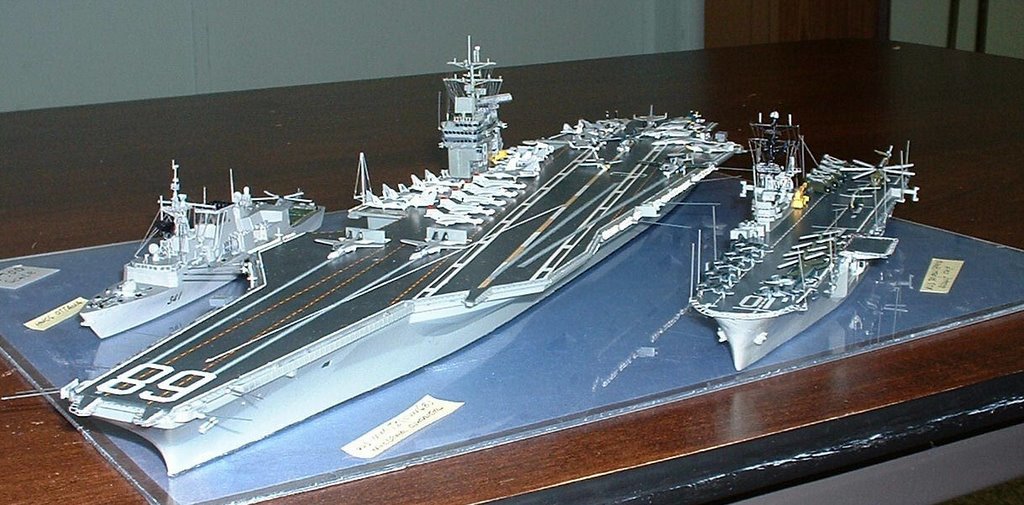
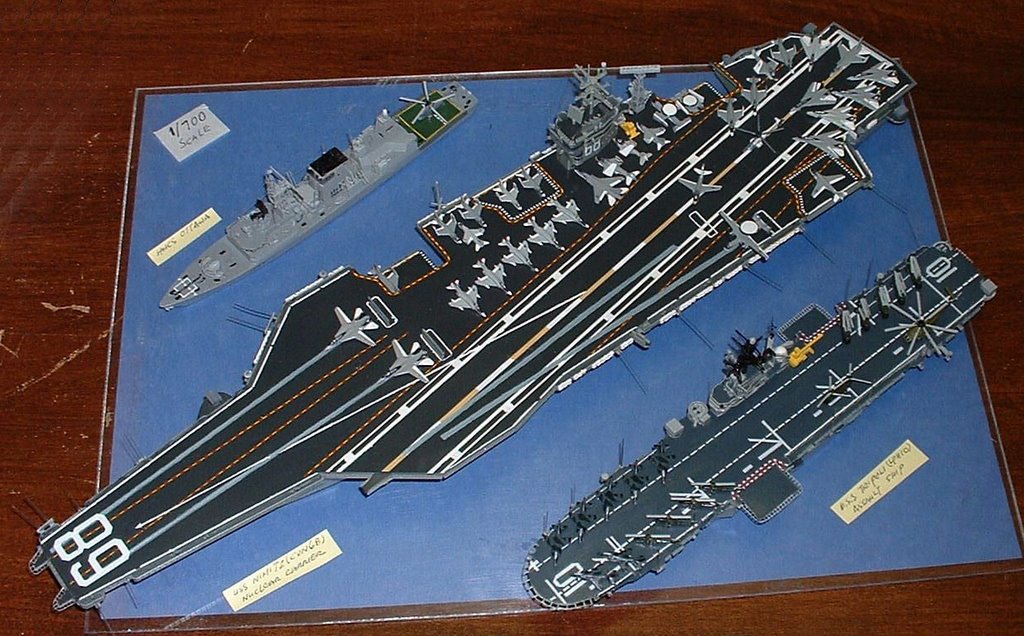
One member specializes in building 1:700 scale waterline ships. Another way to put 1:700 scale is to say that 1 inch in scale is equivalent to 58 feet 4 inches. At most meetings we will often see three or four of these ship models. Although most of these models are built from plastic kits there are exceptions to this.
Some of the model kits are very limited production run resin models. Resin is a cast material that requires much patience and quite a bit of experience in order to get good results.
Other models start out as die cast metal toys. In most cases these require quite a bit of work to make into accurate scale models.
1:700 scale waterline model ships have their advantages. There are many model kits in this scale. The models do not take up much room. There are many after market detailing products available.

Their small size and wealth of detail always attract attention wherever they are displayed.